
1938 — Nazi Pressure on Austrian Jews
Hermann Göring, one of the most powerful leaders in Nazi Germany, issues a warning for Jews in Austria to leave the country. The directive comes in the wake of the Anschluss and signals the rapid escalation of anti-Jewish policies that will soon spread across German-controlled Europe.
This early phase of persecution lays the groundwork for the systematic oppression and eventual genocide that would define the Holocaust.
1940 — Political Stability and New Aircraft
Canadian Election Returns Mackenzie King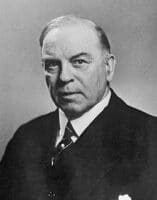
In Canada, voters return William Lyon Mackenzie King as Prime Minister. His leadership will guide Canada through the war as one of the key contributors to Allied manpower, industry, and resources.
First Flight of the Curtiss C-46 Commando
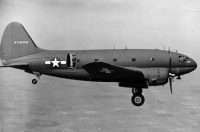
The Curtiss C-46 Commando cargo aircraft makes its first flight in St. Louis, Missouri. Designed as a high-capacity transport aircraft, the C-46 will play a crucial role in airborne logistics, particularly in the challenging “Hump” airlift over the Himalayas supplying China.
1941 — Occupation Policies and Naval Warfare
Einsatzgruppen Approved
The German Army High Command formally approves plans developed by the Reich Main Security Office (RSHA) and Reinhard Heydrich for the deployment of Einsatzgruppen in occupied territories.
These SS mobile killing units will follow advancing German armies into Eastern Europe, carrying out mass executions of Jews, political prisoners, and other targeted groups.
HMS York Disabled at Crete
The British heavy cruiser HMS York is severely damaged at Suda Bay, Crete after being struck by an Italian explosive motorboat. The ship is subsequently beached to prevent sinking, marking a successful Italian special operations attack against Allied naval forces.
1942 — Malta Under Siege
Two freighters from a recent Allied relief convoy are destroyed by Luftwaffe air attacks while still in port at Valletta, Malta. Due to heavy bombing damage to dock facilities, much of the cargo had not yet been unloaded.
Of the approximately 26,000 tons of supplies sent from Egypt, only about 5,000 tons are successfully unloaded, highlighting the severe logistical challenges faced by the island as Axis forces attempt to starve Malta into submission.
Australian Command Reorganized
General Sir Thomas Blamey is appointed Commander-in-Chief of Australian Military Forces, consolidating control over Australia’s military as the Pacific War intensifies.
Churchill Expresses Confidence
Prime Minister Winston Churchill tells members of the Conservative Party that it is now increasingly likely that the Allies “cannot lose this war, except through our own fault.” His statement reflects growing confidence following setbacks suffered by Axis forces.
1943 — Victory at the Mareth Line
The British Eighth Army achieves a decisive victory at the Mareth Line in southern Tunisia, forcing Axis forces to retreat northward. The breakthrough opens the way for continued Allied advances in North Africa and contributes to the eventual collapse of Axis resistance on the continent.
1944 — Soviet Advances in Eastern Europe
Forces under Marshal Ivan Konev advance to the Pruth River along a broad front, continuing the Red Army’s westward push.
Soviet troops also recapture the important Ukrainian city of Kamenets-Podolsk, further weakening German defensive positions in the region.
1945 — Final Allied Advances in Europe and the Pacific
Allied Forces Link Up in Germany
The U.S. Third Army reaches the Main River and establishes contact with the U.S. Seventh Army east of the Rhine near Worms. The Third Army also captures the German city of Darmstadt, continuing the rapid Allied advance into central Germany.
Soviet Gains Near Austria
The Red Army captures the towns of Pápa and Devecser in Hungary, both key defensive positions guarding approaches to Austria.
Meanwhile, Heinrich Himmler is replaced by General Gotthard Heinrici as commander of Army Group Weichsel, reflecting growing instability within the German high command.
Final Fighting on Iwo Jima
The last organized Japanese forces on Iwo Jima launch a final suicide attack against American positions. By the end of the battle, approximately 6,891 U.S. troops have been killed, while more than 20,000 Japanese soldiers are dead and only a small number captured.
Allied Landings in the Philippines and Okinawa
The U.S. Eighth Army lands on the island of Cebu in the Philippines, continuing operations to liberate the archipelago.
At the same time, the U.S. Tenth Army lands on the Kerama Islands, just west of Okinawa. The islands are secured to establish artillery positions and staging areas for the upcoming invasion. During the operation, U.S. forces capture approximately 350 Japanese kamikaze boats.
Death of David Lloyd George
David Lloyd George, the British Prime Minister who led the nation during World War I, dies at the age of 83. His leadership during the previous war had left a lasting impact on British politics and wartime governance.