
1941 — Coup in Yugoslavia and Turning Points in East Africa
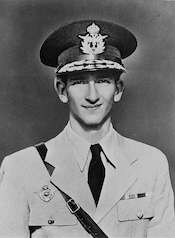 Yugoslav Coup Against the Axis
A dramatic coup d’état in Yugoslavia, led by General Dušan Simović and other army officers, overthrows the pro-German government that had recently aligned with the Axis.
King Peter II assumes control, and a new government is formed, rejecting closer ties with Nazi Germany. The move enrages Adolf Hitler, who immediately orders plans for the invasion of Yugoslavia. The decision delays Germany’s planned invasion of the Soviet Union and leads to the rapid Axis assault on the Balkans in April 1941.
Battle of Keren Won
After weeks of intense fighting in rugged terrain, British and Commonwealth forces finally capture the strategic stronghold of Keren in Eritrea. The battle proves to be one of the hardest fought campaigns of the East African theater.
Allied forces suffer nearly 4,000 casualties, while Italian defenders lose approximately 3,000 men. The defeat forces Italian troops to retreat toward Asmara, opening the route for further Allied advances.
Allied Advances in Abyssinia
The 11th African Division captures Harar in Abyssinia (Ethiopia), after Italian authorities declare the city an “open town” to avoid destruction.
Japanese Spy Arrives in Hawaii
Takeo Yoshikawa, a Japanese naval intelligence officer, arrives in Oahu, Hawaii under the cover of a diplomatic posting. He begins detailed surveillance of the U.S. Pacific Fleet at Pearl Harbor, gathering critical intelligence that will later be used in planning the attack of December 7, 1941.
Lend-Lease Expands U.S. Support
Under the Lend-Lease Act, the United States signs agreements securing 99-year leases on British bases in the Western Hemisphere and approves approximately $7 billion in aid to Britain. The program strengthens Allied capabilities even before America formally enters the war.
1942 — Daring Raid and Expanding Atrocities
St. Nazaire Raid
British commandos launch a daring raid on the German submarine base at St. Nazaire in occupied France. The objective is to destroy the massive dry dock used by German battleships such as the Tirpitz.
The raid, though costly, succeeds in rendering the dock unusable and stands as one of the most audacious commando operations of the war.
Philippine Government Evacuates
The Philippine government, led by President Manuel L. Quezon, arrives in Australia after escaping advancing Japanese forces.
Deportations to Auschwitz
The deportation of French Jews to Auschwitz begins. Approximately 1,000 individuals are transported from the transit camp at Drancy, marking another escalation in the Holocaust in Western Europe.
1943 — Battles in Tunisia and the Aleutians
Tebaga Gap Fighting
German forces delay British and New Zealand troops at the Tebaga Gap in Tunisia before withdrawing to the defensive line at  Wadi Akarit, as the Axis position in North Africa continues to deteriorate.
Battle of the Komandorski Islands
The U.S. Navy engages Japanese forces near the Komandorski Islands in the Aleutians. The battle becomes the longest continuous surface gun engagement in U.S. naval history, fought without air support in harsh northern waters.
1944 — Atrocities in Occupied Europe
In Kaunas, Lithuania, thousands of Jews are murdered by German forces as part of ongoing mass executions in Eastern Europe.
In the Riga Ghetto in Latvia, the Gestapo executes forty Jewish policemen, continuing the systematic destruction of Jewish communities across occupied territories.
1945 — German Defenses Collapse
Eisenhower Declares Breakthrough
General Dwight D. Eisenhower announces that German defenses on the Western Front have been broken, signaling the approaching end of the war in Europe.
Allied Gains Near the Ruhr
The Allied bridgehead north of the Ruhr expands to approximately 700 square miles. In just four days of fighting, Allied forces capture more than 16,000 German prisoners while sustaining significant casualties.
The U.S. Third Army captures the city of Aschaffenburg, continuing its rapid advance into central Germany.
Last V-2 Rocket Hits England
The final V-2 rocket launched against England lands in Orpington, Kent. This marks the end of Germany’s V-weapon campaign against Britain.
Fighting in Danzig
Intense street fighting erupts in Danzig as Soviet forces push into the city’s defenses. German counterattacks from the Küstrin bridgehead stall after only limited gains.
B-29 Mining Operations in Japan
U.S. B-29 Superfortress bombers begin laying naval mines in the Shimonoseki Strait, a key shipping route for Japan. The operation aims to disrupt maritime logistics and further isolate the Japanese home islands.