
1938 — The United States Recognizes the Anschluss
The United States formally recognizes Nazi Germany’s annexation of Austria, known as the Anschluss.
The move reflects the continued policy of appeasement and diplomatic accommodation that characterized much of the international response to Hitler’s early territorial expansion.
1940 — Britain Mobilizes the Home Front
“Kitchen Front” Campaign Begins
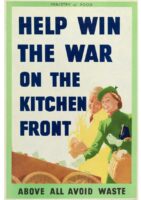
The British Ministry of Food launches the “Kitchen Front” campaign, encouraging civilians to reduce waste and make efficient use of limited food supplies.
The program complements the larger “Dig for Victory” movement and becomes an important part of Britain’s wartime rationing and civilian morale efforts.
Germany Recalls Small Coins
Germany recalls all 1, 2, 5, and 10-pfennig coins in order to reclaim valuable copper and bronze for wartime production.
Replacement coins made primarily of zinc are introduced as Germany increasingly diverts strategic materials toward military manufacturing.
1941 — Axis Invasion of Yugoslavia and Greece
The Balkans Campaign Begins
German, Italian, and Hungarian forces launch the invasion of Yugoslavia and Greece.
The assault comes after political upheaval in Yugoslavia and Hitler’s determination to secure his southern flank before launching the invasion of the Soviet Union.
The Luftwaffe unleashes devastating bombing raids against Belgrade, causing widespread destruction and civilian casualties. Much of the Yugoslav Air Force is destroyed on the ground during the opening attacks.
Disaster at Piraeus
The Luftwaffe also attacks the Greek port of Piraeus near Athens.
During the raid, the British ammunition ship Clan Fraser is struck and explodes in a massive fireball, devastating harbor facilities and causing extensive destruction throughout the port area.
Australian Success at Benghazi
Australian forces capture the strategic Libyan port city of Benghazi, taking six senior Italian generals prisoner.
Meanwhile, Italian attempts to break through British blocking forces at Beda Fomm fail despite repeated attacks.
Rommel Takes Command in Africa
Lieutenant General Erwin Rommel is formally appointed commander of German forces being deployed to North Africa.
His arrival marks the beginning of the Afrika Korps campaign that will soon transform the desert war.
Attack on the Gneisenau
Six British Beaufort torpedo bombers attack the German battlecruiser Gneisenau anchored at Brest, France.
Flying Officer Kenneth Campbell successfully torpedoes the ship before his aircraft is shot down. The damage sidelines Gneisenau for approximately six months.
Campbell is posthumously awarded the Victoria Cross for extraordinary bravery.
1942 — War Expands Across the Pacific and Indian Oceans
Axis Bombers Strike Alexandria
Axis aircraft attack the important British naval base at Alexandria, Egypt, continuing efforts to disrupt Allied operations in the Mediterranean.
Japanese Landings in the Bismarcks
Japanese forces land on Manus Island in the Bismarck Archipelago, expanding their defensive perimeter in the Southwest Pacific.
Air Raids on India
Japanese aircraft attack the Indian cities of Vizagapatam and Cocanada, increasing fears of Japanese expansion toward the Indian subcontinent.
The raids strengthen Indian support for the Allied war effort.
First U.S. Troops Arrive in Australia
The first American ground troops arrive in Australia, marking the beginning of a massive Allied military buildup in the South Pacific.
Australia soon becomes a major staging area for operations against Japan.
German Rationing Tightens
Germany reduces civilian rations of bread, meat, and fats as the war places increasing strain on the German economy.
British Withdraw Ships from Malta
Heavy Luftwaffe attacks force the British to begin withdrawing surface ships from Malta to safer bases at Gibraltar and Alexandria.
The island remains under relentless Axis air assault.
 Japanese-Americans Interned
 Japanese-Americans Interned
Approximately 700 Japanese-Americans are assembled at the Santa Anita Racetrack in California as part of the growing internment program initiated after Pearl Harbor.
1943 — Allied Offensive in Tunisia
British and American forces in Tunisia launch coordinated attacks against the German 5th Panzer Army.
The offensive is part of the final Allied push to eliminate Axis forces from North Africa.
1945 — Final Battles in Europe and Okinawa
Sarajevo Liberated
Yugoslav Partisans liberate the city of Sarajevo from German occupation after years of brutal warfare in the Balkans.
Soviet Assault on Königsberg
Supported by massive artillery and air bombardments, the Soviet 3rd Belorussian Front launches its final assault against Königsberg.
The attack involves approximately 137,000 Soviet troops, over 500 tanks, and more than 2,400 aircraft against the heavily defended city held by roughly 35,000 German troops.
The battle is one of the last major operations on the Eastern Front.
Battle for Vienna Begins
Soviet forces begin the assault on Vienna, Austria, as the Red Army pushes deeper into the collapsing Third Reich.
Massive Japanese Kamikaze Offensive
Japan launches a major counterattack against Allied naval forces off Okinawa under the operation name “Floating Chrysanthemum I.”
Approximately 800 Japanese aircraft, including more than 350 kamikazes, attack the U.S. fleet and ground forces.
American defenses shoot down roughly half the attacking aircraft, but the kamikaze campaign demonstrates the increasingly desperate tactics employed by Japan during the final months of the war.