
1939 — Guarantee to Poland
Britain and France formally agree to support Poland if Germany attempts an invasion. The guarantee signals a hardening of Allied policy toward Nazi expansion and sets the stage for the outbreak of war later that year.
1940 — Commerce Raider Atlantis Departs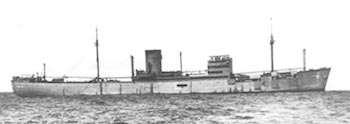
The German armed merchant cruiser Atlantis sets sail on a long-range raiding mission. Disguised and operating far from home waters, Atlantis will go on to sink or capture 22 Allied ships before being destroyed in November 1941, becoming one of the most successful commerce raiders of the war.
1941 — The War Widens Across Air, Sea, and Desert
Blitz Casualties Mount
British civilian losses during March total 4,259 killed and 5,557 injured, underscoring the sustained impact of the Luftwaffe’s bombing campaign against the United Kingdom.
HMS Bonaventure Lost
Italian naval forces sink the British cruiser HMS Bonaventure off Crete, highlighting the continuing threat posed by Axis naval and submarine operations in the Mediterranean.
Fighting Around Mersa Brega
Elements of the German 5th Light Division engage the British 2nd Armoured Division near Mersa Brega. After a day of heavy fighting, British forces withdraw toward Agedabia as Axis pressure increases.
At the same time, General Erwin Rommel pushes forward and captures Ajdabiya, forcing further British retreat and accelerating the Axis advance across Cyrenaica.
U.S. Eyes Greenland
An American scientific and military team arrives in Greenland, then a Danish colony, to assess the establishment of military bases. The move reflects growing U.S. concern over North Atlantic security.
RAF Introduces the “Cookie” Bomb
The RAF deploys the powerful 4,000-pound “Cookie” bomb for the first time in a raid on Emden, Germany. The weapon becomes a key component of British strategic bombing.
Attacks on German Warships in Brest
A force of 109 RAF bombers attacks the German battlecruisers Scharnhorst and Gneisenau in Brest, France, but fails to score any hits due to heavy defenses and challenging conditions.
Political Upheaval in the Middle East
The Crown Prince and Regent of Iraq, ‘Abd al-Ilah, flees to Jordan after learning of an assassination plot, reflecting growing instability in the region.
Meanwhile, Germany and Yugoslavia sever diplomatic relations, further escalating tensions in the Balkans just days before the Axis invasion.
1943 — War at Home and Abroad
Auschwitz Expansion Continues
A newly constructed gas chamber and crematorium, known as Crematorium II, becomes operational at Auschwitz, increasing the camp’s capacity for mass murder.
Australian Troops Celebrated
The Australian 9th Division marches through Melbourne to the cheers of more than half a million people, celebrating its service in North Africa and boosting morale on the home front.
Axis Withdraw in North Africa
Axis forces withdraw from Cap Serrat in Tunisia, while elements of the British First Army capture El Aouana, continuing the Allied advance.
1944 — Heavy Losses and Leadership Changes
RAF Losses Mount
Since November 1943, the RAF has lost more than 1,047 aircraft destroyed and 1,682 damaged during sustained bombing operations over Germany, reflecting the high cost of the strategic air campaign.
Japanese Naval Commander Killed
Vice Admiral Mineichi Koga, Commander-in-Chief of the Japanese Combined Fleet, is killed in a plane crash over Mindanao in the Philippines, dealing a blow to Japanese naval leadership.
1945 — Final Allied Advances Across Europe and Asia
German Retreat in the West
German forces begin withdrawing from the Netherlands as Allied pressure continues to mount across the Western Front.
Crossing the Rhine
The French First Army crosses the Rhine River near Speyer, marking the first French crossing since the Napoleonic era. At the same time, the U.S. Third Army advances to Siegen, pushing deeper into Germany.
Soviets Advance into Central Europe
Soviet forces enter German territory near Sopron in Hungary and capture the industrial city of Ratibor in Upper Silesia, tightening their grip on key regions.
Burma Road Reopened
The British 26th Division reaches the Burma Road, ending eight months of intense fighting and restoring a vital supply route to China.