
1940 — Political Upheaval and the Katyn Massacre
Churchill Takes Greater Control of War Policy
A reshuffle within the British War Cabinet places Winston Churchill in charge of a committee directing overall British war policy.
The move increases Churchill’s influence over strategic decision-making only weeks before Germany launches major offensives across Europe.
Katyn Forest Massacre Begins
Soviet authorities begin the mass execution of approximately 20,000 Polish military officers, intellectuals, and officials in the Katyn Forest and other locations.
The massacre is carried out by the Soviet NKVD and remains one of the most infamous war crimes of the early years of World War II.
U.S. Congress Cuts Military Spending
Despite growing tensions overseas, the United States Congress votes to reduce military spending by 10 percent and refuses funding for additional heavy bombers, which some lawmakers describe as “aggressive weapons.”
The decision reflects the continued strength of isolationist sentiment in America prior to U.S. entry into the war.
1941 — Crisis in Hungary and Iraq
Pál Teleki Commits Suicide
Hungarian Prime Minister Pál Teleki commits suicide rather than cooperate with German demands related to the planned invasion of Yugoslavia.
Teleki had attempted to maintain Hungary’s independence and avoid direct involvement in Hitler’s Balkan campaigns. His death symbolizes the immense political pressure Germany exerted over smaller European nations.
Pro-Axis Coup in Iraq
In Iraq, military officer Rashid Ali al-Gaylani overthrows Regent Abdul Illah and establishes a pro-Axis government.
The coup threatens British strategic interests and oil supplies in the Middle East, eventually leading to direct British military intervention.
1942 — The Pacific and Burma Fronts Intensify
Japanese Bombing of Mandalay
Japanese aircraft launch a devastating bombing raid against Mandalay in central Burma, killing approximately 2,000 civilians.
No RAF fighters oppose the attack, as British aircraft in Burma have already withdrawn to India following heavy losses and Japanese advances.
Final Offensive Against Bataan
The Japanese launch their final offensive against the American and Filipino defenders on Bataan.
After a massive five-hour artillery and air bombardment, Japanese infantry and tank units attack weakened defensive lines, breaking through several positions and pushing Allied forces toward collapse.
The fall of Bataan is now only days away.
U.S. Navy Arrives at Scapa Flow
United States Navy Task Force 39 arrives at Scapa Flow in the Orkney Islands.
The force will help protect Arctic convoys bound for Murmansk and support operations in the Mediterranean, marking the first major deployment of the U.S. Atlantic Fleet into British waters during the war.
1944 — The Attack on Tirpitz
Fleet Air Arm Strikes the Tirpitz
Aircraft from the British carriers HMS Victorious and HMS Furious launch a daring attack against the German battleship Tirpitz anchored in Norway’s Altafjord.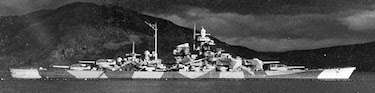
Forty-two Fairey Barracuda torpedo bombers, escorted by fighters, score numerous hits on the warship.
The raid significantly damages Tirpitz and demonstrates the growing reach and effectiveness of British carrier aviation late in the war.
1945 — Allied Forces Advance on All Fronts
Allied Advance into Germany
The British Second Army reaches the German city of Münster, while the U.S. Ninth Army captures Recklinghausen inside the Ruhr region.
At the same time, the U.S. First Army captures the important cities of Fulda and Kassel, continuing the rapid Allied drive into central Germany.
Resistance Plans in Austria
Austrian resistance leader Major Carl Szokoll meets with Soviet military officials to discuss cooperation during the coming offensive against Vienna.
The discussions reflect growing anti-Nazi resistance inside Austria as the Third Reich nears collapse.
Soviets Close on Vienna
The Soviet 2nd Ukrainian Front advances toward Vienna, breaking through German defensive positions between Wiener Neustadt and Lake Neusiedl.
Heavy fighting continues as Soviet forces push westward toward Bratislava and the Austrian capital.
British Commandos in Italy
British commandos secure key islands in Lake Comacchio in northern Italy, helping clear the way for future Allied offensives in the Po Valley.
MacArthur and Nimitz Receive Pacific Commands
General Douglas MacArthur is formally appointed Commander-in-Chief of Allied land forces in the Pacific, while Admiral Chester Nimitz is named Commander-in-Chief of all Allied naval forces in the Pacific.
Together, the two commanders oversee the final campaigns against Japan as Allied forces close in on the Japanese home islands.