
1940 — U-Boat War Expands
German U-boats sink seven neutral ships, demonstrating the widening scope of the Battle of the Atlantic. Even vessels from non-belligerent nations are no longer safe as Germany attempts to disrupt all maritime trade supporting the Allied war effort.
1941 — Milestones in American Industry and Military Integration
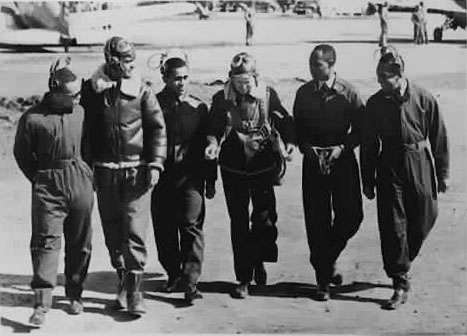 99th Pursuit Squadron Activated
The 99th Pursuit Squadron is activated, becoming the first African American unit in the U.S. Army Air Corps. The unit will later gain fame as part of the Tuskegee Airmen, whose combat record would challenge segregation policies within the U.S. military.
Grand Coulee Dam Opens
The Grand Coulee Dam in Washington State begins operations, becoming the largest source of electric power in the world at the time. The dam plays a critical role in supporting wartime industry, including aluminum production for aircraft manufacturing.
1942 — Naval Battles and Global Conflict
Mediterranean Convoy Battle
Following an unsuccessful Italian torpedo-bomber attack, Admiral Angelo Iachino engages a British convoy in the Mediterranean. The British fleet, commanded by Admiral Philip Vian, deploys a smokescreen to shield the convoy.
During the engagement, the cruiser HMS Cleopatra is damaged. British destroyers launch torpedo attacks against the Italian battleship Littorio. As darkness falls, Iachino breaks off the action and withdraws, allowing the convoy to continue its mission toward Malta.
Japanese Attack Darwin
Japanese aircraft launch another attack on Darwin, Australia, continuing their efforts to disrupt Allied bases in northern Australia following the initial devastating raid in February.
German Repression in Poland
In occupied Poland, a newspaper editor is executed for listening to BBC broadcasts. The incident reflects the brutal measures imposed by German authorities to control information and suppress resistance.
Allied Aid to Vichy France
Britain agrees to allow the United States to deliver emergency flour shipments to Vichy France, highlighting the complex humanitarian and political dynamics of wartime Europe.
Cripps Mission to India
British statesman Sir Stafford Cripps attempts to persuade Mahatma Gandhi and Indian leaders to support the Allied war effort. The mission ultimately struggles due to demands for Indian independence.
1943 — Fighting in Tunisia and Nazi Atrocities
German Counteroffensive in the East
German forces recapture the city of Belgorod, temporarily regaining ground on the Eastern Front following earlier Soviet advances.
Auschwitz Expansion
A new gas chamber and crematorium, known as Crematorium IV, becomes operational at Auschwitz, further increasing the capacity of the Nazi extermination system.
Forced Labor Intensifies
The Nazis extend the workweek in the Netherlands to 54 hours, tightening control over occupied populations and increasing industrial output for the German war effort.
 Patton Advances in Tunisia
 Patton Advances in Tunisia
Forces under General George S. Patton capture Maknassy in Tunisia, continuing Allied efforts to drive Axis forces from North Africa.
1944 — Battles Across Italy and Asia
Tank Battle at Tamu
British forces defeat a Japanese armored force at Tamu near the India-Burma border, demonstrating Allied superiority in armored warfare in the region.
Monte Cassino Offensive Fails
New Zealand forces launch a final assault on Monte Cassino in Italy, but once again fail to break through the heavily fortified German defenses.
Gas Rationing Tightened in the U.S.
In the United States, gasoline rationing becomes stricter as “A” ration cards are reduced from three gallons per week to two, reflecting continued wartime shortages and prioritization of military needs.
1945 — The Rhine Crossed and the War Nears Its End
Remagen Bridgehead Expands
The U.S. First Army expands its bridgehead at Remagen to approximately 30 miles in length, securing a critical foothold east of the Rhine River.
Patton Crosses the Rhine
In a bold and unexpected move, General George S. Patton’s Third Army crosses the Rhine River at Nierstein and Oppenheim during the night, catching German forces by surprise and accelerating the Allied advance into central Germany.
Philippines Campaign Continues
The U.S. Eighth Army secures the island of Panay in the Philippines, further weakening Japanese control over the archipelago as Allied forces continue their advance.