
1939 – Sacrifice in the North Atlantic
Over France, RAF pilots scored a clear victory, shooting down seven German aircraft as the air war intensified even before the Blitz truly began. But events on the ground in occupied Poland carried a far darker weight. The Nazi administration imposed a new decree: all Polish Jews over age twelve were required to wear white armbands marked with a blue Star of David—another step in the tightening oppression that would soon escalate into genocide.
Far out at sea, two of Germany’s most formidable warships, the Scharnhorst and Gneisenau, intercepted a British convoy. The merchant cruiser Rawalpindi—outgunned and outclassed—chose to stand and fight so the convoy could escape. It was a hopeless battle. The Rawalpindi was sunk with the loss of 265 crew, a sacrifice remembered with honor. The British Home Fleet surged out in pursuit, but the German ships had already slipped back toward safe waters.
The Royal Navy recovered something invaluable that day: its first intact German magnetic mine. These mines had been claiming ships around the British Isles—now, for the first time, Britain could study the weapon responsible.
At home, the British public faced new hardships as bacon and butter were added to the growing list of rationed goods. Across the Atlantic, Americans celebrated Thanksgiving—moved one week earlier by President Roosevelt to boost the holiday shopping season. That year’s Macy’s Parade also introduced a new icon: the first-ever Superman balloon.
1940 – Raids, Rationing, and a Growing Axis
In Romania, leader Ion Antonescu formally agreed to join the Tripartite Pact, pulling yet another nation firmly into the Axis sphere.
Over Britain, Fighter Command claimed a dramatic victory by shooting down seven Italian Caproni BR.20 bombers flying from occupied Belgium. Meanwhile, Southampton suffered heavily under Luftwaffe attacks, adding to the mounting destruction across the United Kingdom.
At sea, German submarine U-100 torpedoed and sank seven Allied cargo ships from convoy SC-11 off the coast of Ireland—a stark reminder of how deadly the Battle of the Atlantic had become.
1941 – The Shadow of Moscow and the Cost of Desert War
German spearheads edged ever closer to the Soviet capital, now only 35 miles from Moscow. Winter was closing in, and both armies were nearing the breaking point.
Around Tobruk, days of armored combat culminated in disaster for the Allies as Axis forces destroyed the 5th South African Brigade. In South America, U.S. troops moved into Dutch Guiana to secure vital bauxite mines—critical for wartime aluminum production.
1942 – Momentum Shifts in Russia and North Africa
The Soviets announced they had taken 24,000 prisoners since launching their counteroffensive at Stalingrad—a sign that the tide had turned. Meanwhile, the remnants of Panzer Army Afrika, retreating from Montgomery’s pursuing Eighth Army, pulled back to El Agheila.
In the Pacific, Japanese aircraft launched another raid on Darwin, Australia, keeping pressure on the strategic northern outpost.
1943 – Sangro River Crossings and Pacific Victories
The Allies pushed across the Sangro River in Italy, forcing the Germans into another defensive withdrawal. Berlin endured yet another crushing RAF attack—by now the most heavily bombed city in Germany, with more than 12,000 tons dropped on it in 1943 alone.
In the Pacific, U.S. forces secured the Tarawa and Makin atolls after brutal fighting—costly but strategically vital steps in the push toward the Marshall Islands.
1944 – Liberation Advances in Europe
The Allies announced that Macedonia, along the Greek–Yugoslav border, was now free of German forces. Farther north, the French First Army captured Strasbourg, reclaiming one of France’s most symbolic cities.
1945 – Rationing Fades in America
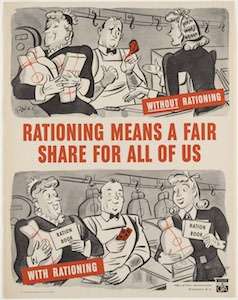 With peace restored, rationing in the United States continued to unwind. On this day, butter finally came off the ration list, leaving sugar as the last item still restricted—a final reminder of the sacrifices made on the home front.
Remembering November 23
From sacrifice at sea and resistance in occupied lands to turning points on distant fronts, November 23 tells a story of courage, hardship, and shifting momentum across a world at war. Each event reminds us that the conflict touched every sea lane, every city, and every home.
Lest we forget.