
1936 – Germany Remilitarizes the Rhineland
Adolf Hitler orders German troops into the Rhineland, openly violating both the Treaty of Versailles and the Locarno Pact. The region had been demilitarized after World War I as a buffer zone between Germany and France.
The move represents one of Hitler’s first major acts of open defiance against the post–World War I settlement. Although the German forces entering the Rhineland are relatively small and under orders to withdraw if confronted by French resistance, no military response comes from the Western powers.
The lack of opposition emboldens Hitler and dramatically strengthens the Nazi regime’s position within Germany, marking a key step on the road to the Second World War.
1941 – Troops Move Toward Greece and War at Sea
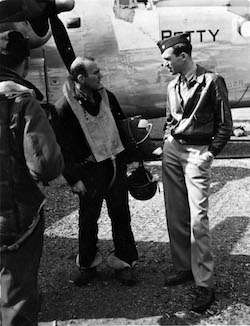 British and Commonwealth troops begin arriving in Greece as part of Britain’s effort to reinforce Greek defenses following Italy’s failed invasion. The buildup comes as Germany prepares to intervene in the Balkans in support of its Axis partner.
At the same time, Nazi authorities order German Jews into forced labor, further tightening the regime’s brutal control over Jewish populations across the Reich.
In the North Atlantic, German submarine U-47, commanded by ace U-boat captain Günther Prien, is sunk by the British destroyer HMS Wolverine. Prien had become famous after his audacious 1939 attack on the Royal Navy anchorage at Scapa Flow.
Elsewhere in the Atlantic, the German submarines U-99 and U-47 attack convoy OB-293 near Iceland, sinking the massive British whaling factory ship Terje Viken, one of the largest vessels destroyed in the war at nearly 20,000 tons.
Across the Atlantic in the United States, actor James Stewart is inducted into the U.S. Army. Stewart will later become one of the most famous combat aviators of the war, flying numerous bombing missions over Europe.
1942 – Crisis in Burma and the Dutch East Indies
In the Mediterranean, British Force H sails from Gibraltar with the aircraft carriers HMS Argus and HMS Eagle, escorted by destroyers, carrying desperately needed Spitfire fighters for the defense of Malta.
When the task force reaches launch range of the island, fifteen Spitfires take off to reinforce the embattled garrison, which has been under constant Axis air attack.
Meanwhile in Southeast Asia, the government of the Dutch East Indies evacuates Java and flees to Australia as Japanese forces complete their conquest of the archipelago.
Japanese troops also capture the strategic port city of Rangoon in Burma, cutting the vital supply route that had connected Allied forces with China.
1943 – A New U-Boat Wolfpack
The German Navy forms a new U-boat wolfpack in the North Atlantic codenamed “Raubgraf” (Robber Baron). The group includes more than a dozen submarines operating against Allied shipping lanes between North America and Britain.
Almost immediately, the wolfpack attacks convoy ON-168. One merchant ship is damaged and abandoned on March 7 before finally sinking several days later, representing a loss of 6,537 gross tons.
Although German U-boats remain dangerous, the tide in the Battle of the Atlantic is beginning to shift as Allied anti-submarine tactics and technology steadily improve.
1944 – Fighting Across the Pacific and Asia
Japanese forces launch the ambitious Imphal–Kohima Offensive, advancing from northern Burma toward the Indian state of Assam. The operation aims to break British defenses and potentially ignite rebellion against British rule in India.
In the Pacific theater, U.S. Marines secure the island of Los Negros in the Admiralty Islands, strengthening the Allied position in the western Pacific and tightening the noose around Japanese strongholds.
Meanwhile, responding to protests from Arab leaders in the Middle East, the United States government clarifies that the concept of establishing a Jewish state in Palestine does not yet have official American support.
1945 – The Bridge at Remagen
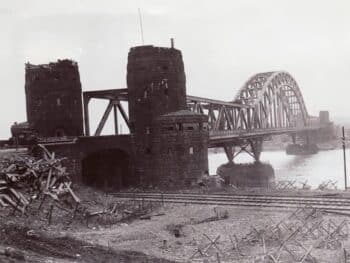 One of the most dramatic moments of the war in Europe occurs when the U.S. 9th Armored Division captures the Ludendorff Bridge at Remagen across the Rhine River.
German forces had failed to destroy the bridge before American troops arrived. Acting quickly, U.S. soldiers rush across the structure under fire and establish a critical bridgehead on the eastern bank of the Rhine.
The capture of the Remagen bridge provides the Allies with their first major crossing of Germany’s last natural defensive barrier and accelerates
the final Allied advance into the heart of the Third Reich.
t these other WWII Posts: