1941 – Pressure in the Balkans and a Bold Commando Raid
Adolf Hitler intensifies pressure on Yugoslavia to join the Tripartite Pact by summoning Prince Paul, the Yugoslav regent, to Berchtesgaden. Hitler demands permission for German troops to transit Yugoslav territory in preparation for an invasion of Greece.
In exchange, he promises territorial concessions, including the port of Salonika and parts of Macedonia.
The diplomatic maneuvering foreshadows the coming Axis invasion of the Balkans.
On the northern coast of Norway, British and Norwegian commandos launch a daring raid on the Lofoten Islands.
Oil production facilities are destroyed, eight German ships are sunk, and valuable intelligence materials—including two Enigma machines and codebooks—are captured.
The raiders also take 285 German prisoners and bring 314 Norwegian volunteers back to Britain.
The operation demonstrates that Allied forces can strike occupied Europe and withdraw successfully.
Meanwhile, Britain begins transferring the first contingent of troops from Egypt to Greece. The force, under General Sir Henry Maitland Wilson, is dispatched to bolster Greek defenses against the looming German threat.
1942 – Strikes Across the Pacific
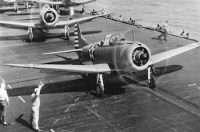 Two Japanese flying boats launch a long-range bombing raid against Pearl Harbor. The attack causes no damage but serves as a reminder that the Pacific conflict remains fluid and unpredictable.
In response, aircraft from the carrier USS Enterprise conduct a strike against Marcus Island in the western Pacific.
The raid represents one of the early American carrier offensives, testing Japanese defenses and projecting U.S. naval air power deep into enemy territory.
1944 – Air War, Arctic Convoys, and Fighting in Burma
On the Eastern Front, Marshal Georgy Zhukov renews major attacks against Field Marshal Erich von Manstein’s Army Group South in Ukraine. Soviet offensives continue to grind down German resistance, pushing the Wehrmacht steadily westward.
In the air war over Europe, the U.S. Army Air Forces prepare their first daylight heavy bomber raid on Berlin.
The mission is officially canceled, but 29 aircraft fail to receive the counter-order and proceed to bomb the German capital.
In Arctic waters, Convoy RA-57, consisting of 31 merchant ships, sails from the Kola Peninsula toward Loch Ewe.
The convoy is attacked off Norway, and the merchant vessel Empire Tourist is sunk by U-703.
However, Allied escorts respond aggressively, sinking three German U-boats during the passage.
In Burma, Merrill’s Marauders—the U.S. 5307th Composite Unit (Provisional)— engage in their first major action. Operating deep behind Japanese lines, they begin a grueling jungle campaign that will become legendary.
1945 – Toward the Oder and Victory in Burma
The Soviet First Belorussian Front breaks through German defenses at Stargard and drives toward Stettin.
Red Army forces also establish a new bridgehead across the Oder River south of Frankfurt, tightening the noose around Berlin.
 In the Pacific, U.S. B-29 Superfortresses land on Iwo Jima for the first time, using the newly secured island as an emergency airfield. The strategic value of Iwo Jima becomes immediately apparent as damaged bombers now have a safe haven closer to Japan.
In Burma, the British Fourteenth Army captures Meiktila, a key communications and supply center.
The victory cripples Japanese logistics in central Burma and accelerates the collapse of enemy resistance in the region.