
1940 — The Winter War Nears Its End
Soviet forces launch a massive offensive against Viipuri (Vyborg), bringing Finland’s second-largest city under direct attack. The scale of Russian manpower and artillery makes it clear that Finnish resistance cannot be sustained much longer. The Winter War, which began in November 1939, is entering its final and most desperate phase for Finland.
Meanwhile, Italy protests to Great Britain over a proposed British ban on Italian imports of German coal, highlighting rising tensions between neutral and belligerent nations as Europe’s economic warfare intensifies.
1941 — Diplomatic Friction in the Balkans
Moscow denounces Axis influence in Bulgaria, condemning the country’s alignment with Germany. The Balkans are rapidly becoming a flashpoint as Germany positions itself for further expansion into southeastern Europe.
1942 — Air War Over Europe Intensifies
RAF Raid on Billancourt
Under its new Commander-in-Chief, Air Vice Marshal Arthur “Bomber” Harris, RAF Bomber Command launches a major attack on the Renault factory at Billancourt, near Paris.
Of the 235 aircraft dispatched, only one fails to return. Although the new GEE navigation system is not used, the target is marked with flares for the first time. The raid inflicts significant damage on production facilities, though many French civilian workers are killed in the attack. For RAF crews, the operation provides a much-needed morale boost after months of heavy losses.
The Lancaster Enters Combat
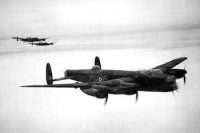 The Avro Lancaster bomber makes its operational debut, laying mines off the French port of Brest. The aircraft will soon become the backbone of Britain’s strategic bombing campaign.
Repression in Occupied France
The Vichy government announces German figures reporting 5,390 French citizens arrested in 1941, with more than 250 executions, underscoring the tightening grip of occupation authorities.
Allied Coordination in Burma
General Chiang Kai-shek meets with General Archibald Wavell in Burma to discuss strategy against advancing Japanese forces in Southeast Asia.
1943 — Tragedy at Home and Gains Abroad
Bethnal Green Disaster
In London, 173 civilians are killed in a tragic crush at Bethnal Green Underground Station. The panic begins when a new anti-aircraft rocket battery is fired for the first time, and the unfamiliar noise sparks fear during an air raid alert. It remains one of Britain’s worst civilian disasters of the war.
Soviets Capture Rzhev
Red Army forces capture Rzhev, over 100 miles west of Moscow. The brutal Rzhev battles have been among the bloodiest of the Eastern Front.
1944 — Shifting Tides
Anzio Offensive Falters
German counterattacks at Anzio cease after losing approximately 3,500 men and 30 Panzers in just four days. The Italian campaign remains a grueling stalemate.
British War Losses Tallied
Total British civilian deaths now stand at 50,324, while military fatalities reach 50,103, illustrating the enormous cost of total war.
Spain Withdraws “Blue Legion”
Under pressure from the Western Allies, Spain orders members of the so-called Blue Legion to return home from service alongside German forces on the Eastern Front. Though officially withdrawn, some fanatical volunteers defy orders and later join the Waffen-SS, fighting to the bitter end in Berlin.
Italian Fleet Divided
The Allies announce that the Soviet Union will receive one-third of the Italian fleet, or an equivalent share of British and American vessels.
Japanese Counterattacks Fail
Japanese counterattacks on Los Negros in the Admiralty Islands fail as Allied forces consolidate their position.
1945 — The Reich Under Siege
Allied Forces Advance in Germany
Units of the Canadian First Army capture Xanten on the lower Rhine during the Battle of the Reichswald. The U.S. First Army captures Krefeld, tightening the noose around western Germany.
Last Luftwaffe Night Raid
In what becomes the final major night intrusion raid of the war, 100 Luftwaffe night fighters attack 27 RAF airfields. The Germans destroy 22 RAF aircraft while losing six of their own. The effort does little to alter the collapsing situation.
Fighting Ends in Manila
After weeks of brutal urban combat, fighting in Manila comes to an end, leaving the city devastated.
Meiktila Secured
Japanese resistance collapses at Meiktila in Burma, marking a decisive moment in the Allied drive to retake the country.
Finland Declares War on the Axis
Finland formally declares war on the Axis powers, cementing its shift away from former cooperation with Germany and aligning itself with Allied efforts in the final phase of the conflict.