
1940 — Tragedy in the English Channel
The British India liner Domala is bombed in the English Channel, resulting in the deaths of approximately 100 passengers and crew. The attack highlights the growing danger to civilian shipping as German air power extends its reach.
1941 — Germany Moves Into the Balkans
German Twelfth Army Enters Bulgaria
The German Twelfth Army moves into Bulgaria as part of preparations for the invasion of Greece. Britain immediately breaks off diplomatic relations with Bulgaria.
German occupation of Bulgaria secures the southern flank for the coming Balkan campaign and further tightens Axis control in southeastern Europe.
RAF Bombs Cologne
The Royal Air Force launches a heavy raid against Cologne, continuing Britain’s strategic bombing campaign against German industrial centers.
1942 — Strategic Concerns and Global Reorganization
Churchill Warns About the Tirpitz
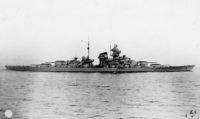 Prime Minister Winston Churchill declares the German battleship Tirpitz to be “the most important naval vessel in the situation today,” believing that her destruction would profoundly alter the course of the war. The threat she poses to Arctic convoys supplying the Soviet Union keeps the Royal Navy on constant alert.
Command Changes in Asia
General Archibald Wavell reassumes his post as Commander-in-Chief of India and Burma. Meanwhile, Burma is effectively cut off from the Southwest Pacific as Japanese advances isolate Allied positions.
The Dutch assume supreme command of Allied forces in the Southwest Pacific, reflecting the urgency of coordination following Japanese offensives.
Australia Mobilizes
In Australia, all adult civilians become liable for compulsory war service, demonstrating the total mobilization of society in the face of Japanese expansion.
U.S. Army Reorganization
The U.S. Army reorganizes into three autonomous commands:
- Army Ground Forces
- Army Air Forces
- Services of Supply
This restructuring improves efficiency and prepares the United States for sustained global operations.
The Stage Door Canteen Opens
The famous Stage Door Canteen opens at Broadway’s 44th Street Theatre in New York City. Movie stars and entertainers volunteer to serve and perform for servicemen, providing morale support on the home front.
1943 — The Battle of the Bismarck Sea
Air Power Devastates a Japanese Convoy
The Battle of the Bismarck Sea begins northeast of New Guinea. U.S. Fifth Air Force B-25 Mitchell bombers employ innovative skip-bombing tactics against a Japanese convoy.
The result is devastating: 12 Japanese ships are sunk, marking a turning point in Allied air superiority in the Southwest Pacific.
German Withdrawal from Tunisia
German forces begin withdrawing from Tunisia as Allied pressure mounts in North Africa.
Berlin Bombed
The center of Berlin is struck by a concentrated RAF raid. Approximately 900 tons of bombs are dropped in just thirty minutes, underscoring the increasing intensity of the strategic air war.
1945 — The Allies Close In on Germany
Ninth Army Reaches the Rhine
The U.S. Ninth Army crosses into Germany and reaches the Rhine River near Düsseldorf, bringing Allied forces to one of Germany’s final natural defensive barriers.
Third Army Captures Trier
The U.S. Third Army captures Trier along the Moselle River, continuing its rapid advance across western Germany.
RAF Firestorm at Mannheim
The RAF launches a heavy attack involving approximately 300 bombers against Mannheim, creating a devastating firestorm within the city.
Corregidor Recaptured
After fourteen days of fierce combat, the 503rd Regimental Combat Team, known as the “Rock Force,” raises the American flag at the Topside Barracks on Corregidor in the Philippines in the presence of General Douglas MacArthur. The symbolic recapture of Corregidor marks a major step in reclaiming the Philippines.
Strikes on the Home Front
In the United States, labor strikes shut down ten Chrysler and Briggs manufacturing plants, illustrating that even as victory approaches abroad, tensions remain on the industrial home front.