
1939 – Finland Holds the Line and a Naval Tragedy Ends
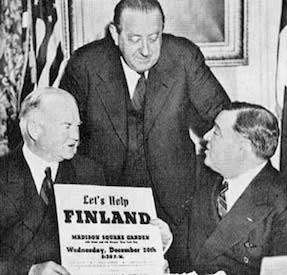
On the Karelian Isthmus, Soviet forces halt their attacks at Summa.
Finnish defenders now control nearly the entire Mannerheim Line, with the sole exception of the heavily contested Oinala Bulge.
The pause marks one of Finland’s most determined successes during the Winter War.
In South America, the saga of the German pocket battleship Admiral Graf Spee reaches a tragic conclusion.
Her captain, Hans Langsdorff, commits suicide after scuttling his ship days earlier,
taking responsibility for the fate of his crew and vessel.
In the United States, public sympathy for Finland is on full display as a “Let’s Help Finland” rally is held at Madison Square Garden in New York City, drawing thousands in support of the embattled nation.
1940 – Bombing and the End of Italian Presence in Egypt
The Luftwaffe continues its bombing campaign against Britain, with heavy attacks striking Liverpool and its vital docks.
In North Africa, British operations achieve a decisive milestone.
No Italian troops remain on Egyptian soil, except as prisoners of war—clear evidence of the collapse of Italy’s early desert offensive.
1941 – Winter Crisis and Command Changes
 As German armies suffer under brutal winter conditions on the Eastern Front,
Propaganda Minister Joseph Goebbels broadcasts an urgent appeal to the German people for winter clothing to aid freezing troops fighting in Russia.
German forces of Army Group Centre, retreating from before Moscow, reach a new defensive line more than 100 kilometers west of the capital.
Under strict personal orders from Hitler, the troops are commanded to stand fast and repel any further Soviet advances—regardless of cost.
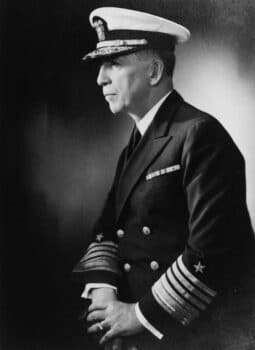
In the United States, Admiral Royal E. Ingersoll assumes command of the U.S. Atlantic Fleet, replacing Admiral Ernest J. King, who is appointed Commander-in-Chief of the U.S. Navy.
1942 – Radar, Bombs, and a New Air War
Britain’s Bomber Command employs the navigation and bombing radar aid “Oboe” operationally for the first time.
The system dramatically improves bombing accuracy and marks a major technological advance in the Allied strategic air campaign.
In India, Japanese aircraft bomb Calcutta for the first time, bringing the war directly to one of the British Empire’s most important cities in Asia.
1943 – Bombing, Intelligence Victories, and Political Shifts
In Spain, Francisco Franco dissolves the Falangist militia, reducing the visible influence of fascist paramilitary forces as the Axis position in Europe deteriorates.
American counterintelligence reports the destruction of a Nazi espionage network in Sicily.
A 19-year-old ringleader, known as “Grammatico”, along with 27 accomplices, is arrested.
Over Germany, the RAF launches the heaviest raid of the war on Frankfurt, dropping more than 2,000 tons of bombs.
Fast-moving Mosquito aircraft follow thirty minutes later, harassing firefighting and rescue efforts in a devastating one-two strike.
In North Africa, General Jean de Lattre de Tassigny meets Charles de Gaulle in Algiers before assuming command of Army B, which will later play a key role in the liberation of France.
In Burma, British forces advance to the Maungdaw Plain during the Arakan campaign, pushing Japanese defenders back in difficult jungle terrain.
1944 – Fuel Shortages and the End of the WASPs
During the Battle of the Bulge, armored units of the 6th SS Panzer Army capture the Belgian town of Stavelot in their grinding push toward the Meuse River.
Desperately short of fuel, German units scour the area in search of Allied gasoline dumps to keep their offensive moving.
In the United States, the WASP (Women Airforce Service Pilots) program is officially terminated.
Returning male combat pilots are reassigned to ferry duties.
Over the course of the war, 1,037 women served as WASPs, with 38 losing their lives in the line of duty—pioneers whose contributions would not be fully recognized until decades later.