
On the night of December 23, 1944, in the Arizona desert outside Phoenix, twenty-five German prisoners of war slipped beneath barbed wire and guard towers and vanished into the darkness. It would become known as the Great Papago Escape—the largest Axis prisoner-of-war escape ever to occur from an American facility during World War II.
Camp Papago Park
Camp Papago Park was constructed in 1943 inside a public recreational area in eastern Phoenix. Originally intended to house Italian prisoners of war, the camp was redesignated in January 1944 for German prisoners only—most of them sailors from the Kriegsmarine.
The camp consisted of five compounds: one for officers and four for enlisted men. At its peak, Papago Park held approximately 3,100 German prisoners, guarded by fewer than 400 American soldiers and officers.
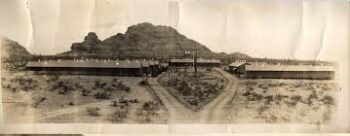 Unlike many POW camps, prisoners at Papago Park were not required to work or attend classes. To combat boredom, many volunteered for labor details, working in cotton fields and other agricultural tasks nearby. The relaxed atmosphere would prove costly.
Captain Jürgen Wattenberg
 Among the officers held at Papago Park was Captain Jürgen Wattenberg, a veteran U-boat commander and the highest-ranking German prisoner at the camp. Wattenberg had commanded U-162, which was sunk off Trinidad in 1942, and had previously fought at the Battle of the River Plate.
Wattenberg had earned a reputation as a troublemaker. Historian Cecil Owen later described him as a “Super Nazi” who was transferred from camp to camp because no command wanted to deal with him. Eventually, he was sent to Papago Park.
The American camp commander made a critical error by housing Wattenberg and the most escape-prone officers together. The camp provost marshal, Captain Cecil Parshall, warned that part of the compound could not be observed from guard towers—a blind spot ideal for escape. His warnings were ignored.
Digging the Tunnel
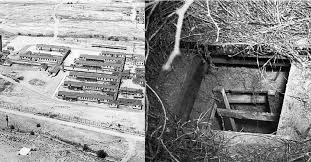 Wattenberg began planning almost immediately. The tunnel entrance was placed inside a bathhouse near the eastern perimeter of the camp. Prisoners could enter the tunnel while supposedly showering.
The entrance was concealed behind a coal box after part of the wooden wall was removed. Wattenberg persuaded guards to issue tools—shovels and rakes—under the pretense of gardening and building a volleyball court. Guards believed tunneling was impossible due to Arizona’s rocky soil.
Work began in September 1944. Teams worked in ninety-minute shifts at night. Dirt was flushed down toilets, hidden in attics, or spread across the volleyball field under construction. Guards never noticed.
By December 20, the tunnel was complete. It measured 178 feet long, extending from the bathhouse to the Cross Cut Canal, with a six-foot vertical shaft at the entrance.
The Escape
At 9:00 PM on December 23, 1944, the escape began. By 2:30 AM, Wattenberg and twenty-four others had passed through the tunnel without detection.
Once in the canal, the escapees split into small groups. Some attempted to float south via the Salt River system on a makeshift raft, hoping to reach Mexico, but abandoned the plan when they found the river nearly dry.
The Manhunt
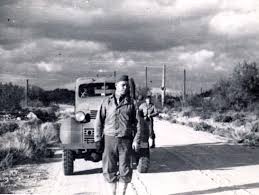 By the evening of December 24, Captain Parshall confirmed prisoners were missing. Hundreds of soldiers, FBI agents, and Papago Indian scouts were mobilized in what newspapers called “the greatest manhunt in Arizona history.”
Most escapees were recaptured within days due to hunger, cold rain, and unfamiliar terrain. Others came within miles of the Mexican border before being captured.
The final holdout was Wattenberg himself. He hid in the mountains north of Phoenix and even slipped back into the city. On January 28, 1945, his accent aroused suspicion while asking for directions. He was arrested the following morning.
Aftermath
All twenty-five escapees were recaptured without bloodshed. Punishment was limited to reduced rations. The FBI investigated security failures, though no guards were severely disciplined.
Today, the former camp site is part of an Arizona National Guard facility. The Arizona Military Museum preserves the story of Camp Papago Park and the Great Escape that briefly turned the Arizona desert into a battlefield of wits.