A day of air power, sea raiders, freezing battlefields, political upheaval, and shifting alliances across a world deep in conflict.
1939 – Graf Spee Strikes Again in the South Atlantic
In the waters off western South Africa, the German pocket battleship Admiral Graf Spee continued its destructive commerce-raiding campaign.
On this day she sank the British liner Doric Star, part of a string of attacks that soon would draw a Royal Navy hunting group into pursuit—leading toward the climactic Battle of the River Plate.
1940 – Greek Forces Advance & A New U.S. Navy Fighter Takes Flight
Greek Army Pushes Deeper Into Albania
In the rugged mountains along the Albanian frontier, Greek troops made significant gains, capturing Premeti, Pogradec, and the coastal port of Sarande.
Mussolini’s invasion of Greece—meant to be a quick victory—was rapidly becoming a costly debacle for Italy.
 F4F-3 Wildcat Enters U.S. Navy Service
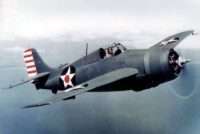 F4F-3 Wildcat Enters U.S. Navy Service
A major milestone for American naval aviation: the F4F-3 Wildcat officially entered U.S. Navy service.
Tough, compact, and capable of operating from carriers, the Wildcat would become the frontline Navy fighter during the critical early years of the Pacific War—carrying U.S. pilots through battles from Wake Island to Guadalcanal.
1941 – Code Destruction, Leaked War Plans & Frozen Fronts
A Brutal Freeze on the Eastern Front
On the Russian Front, temperatures plunged to –31°F (–37°C).
The extreme cold crippled equipment and inflicted suffering on German troops already exhausted by months of fighting. The winter that German planners had dismissed as mild or manageable was becoming one of their greatest adversaries.
Japanese Embassy Begins Destruction of Codes
In Washington, staff at the Japanese Embassy began systematically destroying codebooks and classified files—a clear sign that diplomatic negotiations were collapsing. Within days, the attack on Pearl Harbor would make their intentions unmistakable.
U.S. War Plans Leak to the Press
A political shock hit the United States when the Chicago Tribune and Washington Times-Herald published details of the secret American “Victory Program,” outlining U.S. plans for massive wartime mobilization.
The leak—sourced from isolationist Senator Burton Wheeler—ignited fierce accusations of warmongering and deepened the national debate over America’s role in the global conflict.
Rommel Retreats in North Africa
In Libya, General Erwin Rommel pulled his forces back to the Gazala line as British pressure increased.
The desert campaign shifted once more, with both sides preparing for renewed clashes.
1942 – Air Raids on Naples & Fighting in Tunisia
U.S. Fifth Air Force Strikes Italy
The U.S. Fifth Air Force conducted its first mission against Italy, bombing the port of Naples—a key hub supplying Rommel’s Afrika Korps.
The attack marked the beginning of sustained American air action against Italian cities.
U.S. Ninth Air Force Joins the Bombing Campaign
From Egypt, the U.S. Ninth Air Force launched its own raid on Naples, further tightening pressure on Axis supply lines feeding the North African front.
German Gains in Tunisia
In Tunisia, German forces captured Tebourba, pushing back newly arrived Allied troops as the struggle for North Africa intensified following Operation Torch.
Roosevelt Ends the WPA
President Franklin D. Roosevelt officially terminated the Works Progress Administration (WPA), the vast New Deal jobs program created during the Great Depression.
America’s economy had fully shifted from recovery to all-out war production.
1943 – Partisans Rise, Diplomats Meet & War at Sea
Tito’s Partisans Form a Provisional Government
In liberated territory in Yugoslavia, Tito’s Partisans established a provisional government, solidifying their political position and reshaping Yugoslavia’s postwar trajectory.
German Offensive at Kerch
Units of the German 11th Army launched an assault to eliminate the Soviet bridgehead at Kerch in eastern Crimea—a region that had become a focal point of repeated offensives on both sides.
The Second Cairo Conference Opens
In Cairo, Churchill, Roosevelt, and Turkish President İnönü convened for a second Allied conference, aimed at persuading Turkey to strengthen its commitment to the Allied cause.
Bolivia Declares War on the Axis
Another nation joined the Allied coalition as Bolivia declared war on Germany, Italy, and Japan.
USS Sailfish Sinks Japanese Carrier
In the Pacific, the U.S. submarine USS Sailfish torpedoed and sank the Japanese escort carrier Chuyō, killing roughly 1,250.
Submarine warfare continued to erode Japan’s naval power and supply lines.
1944 – Martial Law in Greece & Offensives in Burma
Athens Under Martial Law
In Greece, the capital of Athens fell into turmoil as civil strife exploded between Communist and Royalist factions, prompting the declaration of martial law.
Partisans Liberate Ravenna
In northern Italy, Italian partisans won a major victory by liberating the city of Ravenna—one of the first major urban centers freed primarily by resistance fighters.
British Offensive Across the Chindwin
In Burma, the British Fourteenth Army launched a major offensive, crossing the Chindwin River and driving deeper into territory held by Japanese forces.
1945 – The United States Joins the United Nations
The U.S. Senate voted overwhelmingly to allow the United States to join the United Nations and to authorize the use of American forces in maintaining global peace.
The decision marked a historic commitment to international cooperation and a decisive end to America’s interwar isolationism.
Remembering December 4
From the cold Atlantic sea to the deserts of Libya, from the frozen plains of Russia to the political upheaval of Greece,
December 4 reflects the worldwide scale of a war that reshaped nations, alliances, and the future of international order.
Lest we forget.