
1938 – Diplomatic Pressure on Nazi Germany
The United States sends its fourth diplomatic note to Berlin, demanding amnesty
for Jews persecuted under Nazi racial laws. Germany rejects the appeal, continuing its policy of repression.
1939 – War Gathers Momentum
A fifth British division arrives in France as the British Expeditionary Force continues to expand.
In South America, the Uruguayan government grants the commander of the German pocket battleship
Admiral Graf Spee a 36-hour deadline to leave Montevideo harbor under international law.
Meanwhile, Soviet forces launch heavy attacks against Finnish defenders at Taipale,
intensifying the Winter War along the Karelian Isthmus.
1940 – History and Symbolism
The coffin of Napoleon II is transferred from Vienna to Les Invalides in Paris,
a symbolic gesture orchestrated by the Vichy government amid occupation and collaboration.
1941 – A Global War Intensifies
Labor, Education, and Mobilization
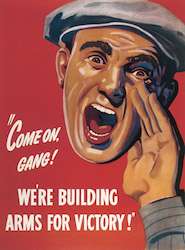 The American Federation of Labor adopts a no-strike policy for war industries, pledging uninterrupted production for the duration of the conflict.
Across the United States, many universities agree to accelerate undergraduate education by moving to year-round, three-year degree programs to support the war effort.
Fighting in Asia and the Pacific
British forces continue their retreat in Malaya and at the southern tip of Burma, while fierce artillery exchanges rage at Hong Kong.
Japanese troops move into southern Burmese territory along the Kra Isthmus and seize Victoria Point, abandoned by British forces days earlier. Japanese artillery and aircraft continue to pound Hong Kong’s defenses.
Aftermath of Pearl Harbor
U.S. Secretary of the Navy informs Congress that 2,729 Americans were killed during the Japanese attack on Pearl Harbor.
A milestone at sea follows as the first Japanese merchant ship is sunk by a U.S. submarine.
The Eastern Front Turns
Confident that the immediate threat to Moscow has passed, Joseph Stalin orders all functions of the Soviet state to return to the capital.
Stalin also commands that the Red Army’s counteroffensive be extended along the entire Eastern Front.
The city of Klin is recaptured, and orders are issued for the destruction of German Army Group Centre through a massive double envelopment from north and south.
North Africa
The British Eighth Army attacks German and Italian positions at Gazala.
Fearing encirclement, Field Marshal Erwin Rommel orders a withdrawal.
1942 – Arctic Convoys
Convoy JW-51A departs Loch Ewe in Scotland, escorting 16 merchant ships bound for the Kola Inlet in the Soviet Union—another perilous journey through Arctic waters.
1943 – Shifting Alliances and War Crimes
Great Britain, the United States, and the Soviet Union break diplomatic relations with the Yugoslav government-in-exile and formally recognize Tito’s Communist Partisans as the legitimate government.
At Kharkov, the war crimes trial of four captured Germans opens. All defendants plead guilty, with testimony revealing that more than 30,000 civilians were exterminated at Kiev.
In the Pacific, U.S. Army forces land at Arawe on New Britain, southwest of Rabaul.
The U.S. Navy approves the commissioning of its first African American officers.
By war’s end, 36 African Americans will receive commissions.
1944 – Loss, Advance, and Tragedy
Band leader and Army Air Forces officer Glenn Miller boards a single-engine C-64 Norseman in England en route to France to arrange a Christmas broadcast.
The aircraft never arrives, and no trace of Miller or the plane is ever found.
Miller had joined the Army in 1942 to boost morale through music, leading a 50-piece band that performed for troops across Europe. The cause of the crash remains unknown, though icing conditions or accidental bomb jettisoning by RAF aircraft are considered likely causes.
In Burma, Chinese forces capture Bhamo after Japanese troops evacuate during the night.
The 19th Indian Division links up with the British 36th Infantry Division at Indaw, forming the first continuous Allied front in Burma.
In the Philippines, the U.S. 24th Army Division lands on Mindoro Island without loss.
Tragedy strikes when a third Japanese prison ship is mistakenly sunk by U.S. aircraft off the Philippines.
Less than half of the Allied prisoners aboard survive.
1945 – The Postwar World Takes Shape
Plans are announced to establish the permanent headquarters of the United Nations in the United States.
In Japan, General Douglas MacArthur orders the abolition of Shinto as the state religion, marking a profound shift in Japan’s postwar political and cultural life.