
1937 – The Rape of Nanking Begins
Japanese authorities change the name of Peiping to Peking.
On this day, Japanese forces begin what will become known as the Rape of Nanking.
Over the coming weeks, Japanese troops massacre an estimated 250,000 Chinese civilians and prisoners of war.
The atrocities committed during the occupation will stand among the most horrific war crimes of the twentieth century.
1939 – Soviet Union Expelled from the League of Nations
In response to its brutal aggression against Finland during the Winter War,
the Soviet Union is formally expelled from the League of Nations.
1940 – Allied Troop Movements in North Africa
Australian troops arrive in Egypt to relieve Indian forces.
The Indian units are redeployed southward to the Sudan as the British Empire continues to shift forces
to meet growing Axis threats in Africa.
1941 – Orders, Evacuations, and Expanding War
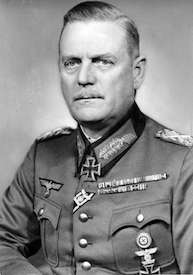 German Field Marshal Wilhelm Keitel orders the construction of extensive defensive positions along the European coastline, foreshadowing the fortifications that will later be known as the Atlantic Wall.
As German forces evacuate Kalinin, roughly 100 miles northwest of Moscow, Adolf Hitler reacts furiously. Viewing any withdrawal as weakness, he overrules Field Marshal von Brauchitsch’s plans and forbids further retreats.
In the Atlantic, Convoy HG76, consisting of 32 ships, sails from Gibraltar under heavy escort.
At sea in the Mediterranean, Royal Navy destroyers sink two Italian light cruisers off Cape Bon.
Both vessels had been carrying desperately needed fuel for Panzerarmee Afrika.
However, the German submarine U-557 strikes back, sinking the British cruiser HMS Galatea outside Alexandria harbor.
In Southeast Asia, Thailand formally allies with Japan.
Meanwhile, Japanese troops continue landing operations throughout the Philippines, tightening their grip on the archipelago.
1942 – Tank Battle South of Stalingrad
A major three-day tank battle begins south of Stalingrad as German and Soviet armored forces clash in the desperate struggle for control of southern Russia.
1943 – German Strength on the Eastern Front Declines
German manpower on the Eastern Front falls to approximately 2,086,000 troops, supported by 188,000 allied and satellite forces.
German casualties for the year reach an estimated 900,000, underscoring the devastating cost of the conflict.
1944 – America Creates Five-Star Ranks
The U.S. Congress passes, and President Franklin D. Roosevelt signs into law, legislation authorizing the creation of the ranks of General of the Army and Fleet Admiral.
The move ensures that America’s senior commanders hold rank equivalent to Allied Field Marshals.
In the following days, George C. Marshall, Douglas MacArthur, Dwight D. Eisenhower, and Henry “Hap” Arnold are promoted to General of the Army, while William D. Leahy, Ernest J. King, and Chester Nimitz receive the rank of Fleet Admiral. After the war, William F. “Bull” Halsey and Omar N. Bradley will join their ranks.
In the Pacific, U.S. forces capture a key Japanese supply position on Leyte, at the southern end of the so-called Yamashita Defense Line.
1945 – Justice at Bergen-Belsen
SS personnel convicted of atrocities committed at Bergen-Belsen and other concentration camps are executed, bringing a measure of justice for crimes uncovered in the aftermath of liberation.