
World War II Today: November 28
A day marked by diplomatic breaks, shifting fronts, high-level Allied strategy, and the slow collapse of Axis power across multiple theaters.
1939 – Treaties Broken and Troops Prepared
Tensions in Northern Europe escalated sharply as the Soviet Union formally denounced its 1932 non-aggression pact with Finland.
This diplomatic rupture pushed the two nations closer to the Winter War, which would erupt within days.
At the same time, the Australian Cabinet agreed to commit troops overseas, further strengthening the Commonwealth’s military contribution
as the global conflict intensified.
1940 – Propaganda on the Home Front
In Germany, the Nazi regime released the anti-Semitic propaganda film Der Ewige Jude (The Eternal Jew).
Designed to fuel hatred and justify persecution, the film became one of the regime’s most infamous tools of dehumanization.
1941 – Strategic Withdrawals and a Carrier Saved by Chance
On the Eastern Front, the overextended and undersupplied III Panzer Corps was forced to evacuate Rostov and fall back to the Mius River,
30 miles to the west. The retreat marked a significant setback for German forces struggling against winter conditions and fierce Soviet resistance.
In the Pacific, the aircraft carrier USS Enterprise departed Pearl Harbor to deliver F4F Wildcat fighters to Wake Island.
This timely mission, undertaken just days before December 7, inadvertently kept the carrier out of Pearl Harbor when the Japanese attack occurred—
a twist of fate that preserved one of America’s most important fleet carriers for the early war effort.
1943 – The Big Three Meet in Tehran
The historic Tehran Conference opened today, bringing together Churchill, Roosevelt, and Stalin for the first time.
The Allied leaders began discussions that would reshape Europe’s postwar boundaries, particularly concerning the future of Poland and the division of Germany.
Decisions made at Tehran would influence global politics for decades.
Meanwhile in Italy, the Eighth Army continued its offensive across the Sangro River, establishing a second bridgehead as the Allies pushed steadily northward.
1944 – Breakthroughs in Europe and a City Reopens Its Gates
The U.S. Ninth Army reached the Roer River from Jülich to Linnich, tightening pressure on German defenses in the West.
Farther south, the French First Army closed its pincers at Burnhaupt, though only part of the German LXIII Corps was trapped.
Since October 14, the French had captured 17,000 prisoners and 120 guns in their drive across Alsace.
A major logistical victory unfolded in Belgium: the port of Antwerp officially reopened as the first Allied convoy arrived,
restoring critically needed supply routes for operations on the Western Front.
In the Balkans, Albania was fully secured as German forces completed their evacuation, handing control to partisan forces.
On the home front, British actor Arthur Treacher—famous for his portrayals of the perfect butler—agreed to be raffled off at war bond rallies.
The winner would receive his services as a butler for an event of their choosing, blending celebrity humor with wartime fundraising.
1945 – The Human Cost Revealed
The official casualty numbers from the atomic bombings of Hiroshima and Nagasaki were released:
between 110,000 and 165,000 dead, a staggering confirmation of the devastation and human cost of nuclear warfare.
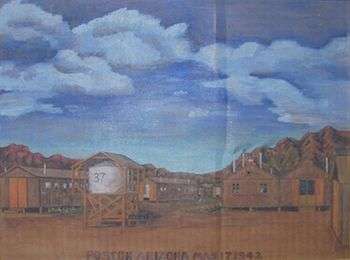
In the United States, the Poston Relocation Center in Arizona—one of the largest Japanese American internment camps—closed its doors.
Families displaced since 1942 began the difficult process of rebuilding their lives in a country changed by war.
Remembering November 28
From broken treaties and propaganda films to global summits and decisive breakthroughs, November 28 reflects the vast scale of World War II—
the fighting on distant fronts, the decisions made in conference rooms, and the everyday lives changed by conflict.
Each event reveals how quickly the war’s direction could shift and how far-reaching its impact truly was.
Lest we forget.