
1941 — RAF Strikes Berlin and Rommel Advances
The Royal Air Force conducts its first bombing raid of the year against Berlin, signaling Britain’s continued ability to strike deep into Nazi Germany.
In occupied France, German troops parading in Cherbourg have their ceremony abruptly disrupted when British bombers strike the parade ground in the middle of the event, demonstrating the growing reach of Allied air power.
In North Africa, General Erwin Rommel launches a limited offensive and quickly recaptures El Agheila from British forces. The ease of the victory encourages Rommel to continue advancing toward Mersa Brega, beginning a renewed Axis push across Cyrenaica.
Meanwhile, British Somaliland is declared clear of Italian forces, marking the successful conclusion of Allied operations in that region.
1942 — War Policies and the Pacific Intensifies
Singapore Inquiry Refused
During a debate in the House of Lords, the British government refuses to hold a formal inquiry into the catastrophic fall of Singapore, one of the most significant defeats suffered by the British Empire during the war.
Deportations to Auschwitz Begin
The deportation of Slovak Jews to the concentration camp at Auschwitz begins, marking another tragic phase in the expansion of the Holocaust across Europe.
 Japanese Bombing of Bataan and Corregidor
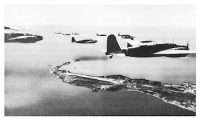
Japanese forces begin an intensive bombing campaign against the American and Filipino defenders on Bataan and Corregidor. General Masaharu Homma’s 14th Army prepares for its final offensive, reinforced by the arrival of the experienced 4th Division from Shanghai.
1943 — Submarine Success and Chindit Operations
USS Wahoo Strikes in the Yellow Sea
The U.S. submarine USS Wahoo sinks three Japanese cargo ships near Port Arthur in the Yellow Sea, continuing the aggressive American submarine campaign against Japanese shipping.
First Chindit Raid Ends
The first long-range penetration operation by the Chindits in Japanese-occupied Burma comes to an end. Although the force suffers heavy losses—losing nearly one-third of its men—the raid significantly boosts Allied morale and demonstrates the effectiveness of deep-penetration jungle warfare.
1944 — Brutal Fighting Across Europe and Asia
Anzio Under Heavy Attack
The U.S. Fifth Army bridgehead at Anzio comes under intense bombardment from German heavy artillery and Luftwaffe aircraft using guided bombs. The attacks cause severe losses in men, ships, and equipment.
Monte Cassino Stalemate
Repeated Allied assaults against the Gustav Line at Monte Cassino are once again repulsed by determined German defenders, prolonging the costly Italian campaign.
Fosse Ardeatine Massacre
Following a partisan attack in Rome that kills 35 German soldiers, SS Colonel Herbert Kappler orders the execution of 335 Italian civilians and prisoners in reprisal. The victims are murdered in the Fosse Ardeatine caves, one of the most notorious atrocities committed in Italy during the war.
Soviet Advances Continue
A Soviet tank army crosses the Dnieper River near the Czech border, while Marshal Rodion Malinovsky leads additional crossings of the Bug River near the Black Sea, pushing German forces westward.
Air War Over Europe
The Luftwaffe launches a raid on London using medium bombers, while the RAF responds with a massive attack on Berlin involving 810 Lancaster bombers. The RAF loses 72 aircraft in what becomes the final and heaviest raid of the “Battle of Berlin”, marking the end of the prolonged bombing campaign against the German capital.
 Loss of Chindit Leader
 Loss of Chindit Leader
Major General Orde Wingate, the charismatic leader of the Chindits, is killed in a plane crash, dealing a major blow to Allied special operations in Burma.
Japanese Defeated on Bougainville
Japanese counterattacks on Bougainville are decisively defeated by Allied forces, further securing the island as a base for operations in the Pacific.
Roosevelt Condemns War Crimes
President Franklin D. Roosevelt issues a statement condemning ongoing German and Japanese “crimes against humanity”, highlighting growing international awareness of wartime atrocities.
1945 — Massive Allied Rhine Crossing and Final Offensive
Operation Plunder Begins
Field Marshal Bernard Montgomery’s 21st Army Group launches a major assault across the Rhine River near Wesel following a massive 3,500-gun artillery barrage.
In conjunction with the assault, 16,870 Allied paratroopers land east of the Rhine in airborne operations that successfully link up with advancing ground forces and establish multiple bridgeheads.
U.S. Third Army Advances
The U.S. Third Army captures the cities of Speyer and Ludwigshafen along the upper Rhine, continuing its rapid advance into Germany.
Tuskegee Airmen in Combat
The U.S. Fifteenth Air Force, operating from bases in Italy, sends 660 bombers to attack Berlin as a diversion for the Rhine crossings. Escorting them is the 332nd Fighter Group, the famed Tuskegee Airmen, who shoot down three German Me 262 jet fighters and earn a Distinguished Unit Citation.
Soviets Capture Neisse
The 1st Ukrainian Front captures the city of Neisse in Upper Silesia, tightening Soviet control over key industrial regions.
Marines Advance Toward Okinawa
U.S. Marines seize islands off the coast of Okinawa, preparing for the upcoming invasion of the Japanese home islands and marking the final phase of the Pacific campaign.