1941 — Naval Commands and the Debut of the Halifax Bomber
 Eastern Sea Frontier Established
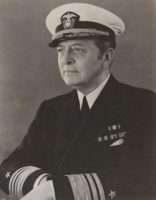
Vice Admiral Adolphus Andrews assumes command of the U.S. Navy’s newly created North Atlantic Naval Coastal Frontier, later known as the Eastern Sea Frontier. The command is responsible for protecting American coastal waters and vital shipping lanes in the Atlantic as German U-boat activity continues to grow.
RAF Bombs Le Havre
The Royal Air Force launches an attack against the occupied French port of Le Havre. The raid also marks the operational debut of the new four-engine Handley Page Halifax bomber, one of the RAF’s principal heavy bombers.
Six Halifax aircraft participate in the raid. Tragically, one is mistakenly shot down by an RAF night fighter during its return flight, an early example of the dangers of friendly fire during nighttime operations.
Vichy France Issues Warning
The government of Vichy France warns that it may deploy its navy unless Britain allows food shipments to reach the French population. The situation highlights the complex and often tense diplomatic balance between Vichy authorities and both Axis and Allied powers.
1942 — Fighting Across the Pacific
Japanese Advances in New Guinea and the Solomons
Japanese forces land at Finschhafen in New Guinea and occupy Buka Island in the northern Solomon Islands. At the same time, Japanese aircraft launch attacks against Port Moresby in Papua, a key Allied defensive position.
 U.S. Carrier Strikes at Lae and Salamaua
 U.S. Carrier Strikes at Lae and Salamaua
Aircraft launched from the American aircraft carriers USS Lexington and USS Yorktown strike Japanese forces at Lae and Salamaua on the northeastern coast of New Guinea. These raids represent one of the earliest successful American carrier operations in the Pacific war.
War Costs Mount
The British government reports that national spending on World War II has already surpassed the total cost of World War I, reflecting the enormous economic scale of the global conflict.
German Spy Arrested in Brazil
Using intercepted communications provided by the FBI, Brazilian police arrest a German spy whose message to Hamburg included detailed sailing information for the troopship Queen Mary, which was carrying approximately 10,000 American soldiers across the Atlantic.
1943 — American Air Power Expands
P-47 Thunderbolt Enters Combat
The powerful P-47 Thunderbolt flies its first combat mission with the U.S. Eighth Air Force over Europe. The rugged fighter will soon become one of the most effective Allied aircraft for bomber escort and ground attack missions.
Allied Progress in Tunisia
American forces retake the Tunisian town of Sbeïtla, continuing the difficult campaign to push Axis forces from North Africa.
Fourteenth Air Force Activated
The United States Fourteenth Air Force is activated under Major General Claire Chennault and based at Kunming, China. The force grows from the legendary “Flying Tigers” and will play a key role in the air war against Japan.
1944 — Soviet Advances and Neutral Ireland
Uman Captured
Soviet forces capture the Ukrainian city of Uman as the Red Army drives toward the Bug and Dnieper Rivers, continuing its powerful westward offensive against German forces.
Ireland Maintains Neutrality
The Irish government refuses Allied demands to expel all Axis diplomats and denies accusations that Germany is using Ireland to spy on Allied troop movements. Ireland maintains its strict policy of neutrality throughout the war.
1945 — Allied Forces Advance on Multiple Fronts
Soviets Push Toward Danzig
The 2nd Belorussian Front captures Zoppot as Soviet forces advance toward the major Baltic port of Danzig. Meanwhile, the German navy evacuates 25,000 civilian refugees from the besieged fortress port of Kolberg in Pomerania.
Command Changes on the Western Front
Field Marshal Albert Kesselring replaces Field Marshal Gerd von Rundstedt as commander-in-chief of German forces in the West. German troops evacuate Wesel on the lower Rhine while the U.S. Third Army captures the important city of Bonn.
Allied Landings in the Philippines
The U.S. Eighth Army launches an invasion of the Zamboanga Peninsula on the island of Mindanao in the Philippines, continuing the campaign to liberate the archipelago from Japanese occupation.
1949 — “Axis Sally” Convicted of Treason
 Mildred E. Gillars, the American-born Nazi propagandist known as “Axis Sally,” is convicted of treason in Washington, D.C. for broadcasting propaganda on behalf of Nazi Germany during the war. She is sentenced to prison and ultimately serves twelve years.
Take a look at these other WWII Posts: