
1940 – Diplomacy in Berlin and the Winter War Nears Its End
U.S. Under Secretary of State Sumner Welles arrives in Berlin to begin a diplomatic peace mission across Europe. Acting on behalf of President Franklin D. Roosevelt, Welles seeks to explore whether any negotiated settlement between the belligerent powers might still be possible.
Meanwhile, the Soviet Union’s peace ultimatum to Finland expires.
After months of bitter fighting in the Winter War, Finland stands on the brink of accepting harsh Soviet terms as Red Army pressure mounts.
1941 – Expansion of War and Repression
Bulgaria formally joins the Tripartite Pact, aligning itself with Germany, Italy, and Japan. The decision follows the discovery of a pro-British coup attempt within the country.
In Italy, civilian food rations are cut in half to allow greater food exports to Germany, reflecting the growing strain of sustaining the Axis war effort.
In occupied Poland, Heinrich Himmler makes his first visit to Auschwitz. During the inspection, he orders Commandant Rudolf Höss to begin a massive expansion of the camp system, including the construction of a new complex at nearby Birkenau capable of holding 100,000 prisoners. The decision marks a grim turning point in the machinery of Nazi persecution.
In East Africa, the British 11th African Division begins a rapid pursuit of retreating Italian forces, advancing north from Mogadishu toward the Ogaden Plateau.
The Italian position in the region continues to collapse.
1942 – Naval Disaster in the Java Sea
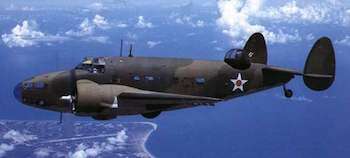
A U.S. Navy Hudson bomber from squadron VP-82, operating from Argentia, Newfoundland, sinks German submarine U-656 off Cape Race, marking one of the early American successes in the Battle of the Atlantic.
In the Pacific, Allied naval forces suffer a devastating defeat following the Battle of the Java Sea. Attempting to escape toward Australia, the heavy cruiser USS Houston and light cruiser HMAS Perth, along with accompanying destroyers, unexpectedly encounter a large Japanese invasion force at Bantam Bay near the Sunda Strait.
In the fierce nighttime engagement that follows, both Houston and Perth are sunk by torpedoes and gunfire. The Japanese fleet—composed of heavy and light cruisers, destroyers, and transports—fires an extraordinary 87 torpedoes. In the confusion, Japanese forces accidentally sink one of their own minesweepers and a transport while damaging several others.
The defeat effectively ends organized Allied naval resistance in the Dutch East Indies.
1943 – Strategic Bombing and Shifting Fronts
The Royal Air Force launches widespread strategic bombing operations against European railway lines, seeking to disrupt German logistics and troop movements across the continent.
On the Eastern Front, Soviet forces announce significant gains south of Leningrad under Marshal Semyon Timoshenko. German troops begin evacuating the exposed Rzhev salient, shortening their lines in the face of sustained Red Army pressure.
In New York City, American Jews hold a massive rally at Madison Square Garden, urging the U.S. government to take stronger action to rescue the Jews of Europe.
1944 – Honors and Offensive Operations
Wing Commander John Cunningham, credited with 20 aerial victories, receives a second bar to his Distinguished Service Order, becoming the first pilot to achieve the rare distinction of three DSOs.
In the Baltic region, both German and Soviet forces transition to defensive postures as the winter campaigns exhaust both armies.
In Burma, the legendary Chindits cross the Chindwin River, beginning deep-penetration operations behind Japanese lines in a bold and unconventional campaign.
1945 – The Rhine and Controversy at Sea
The U.S. Ninth Army captures München-Gladbach and Rheydt, pushing German forces back west of the Rhine River as Allied troops close in on the heart of Germany.
On the Eastern Front, units of Army Group Centre briefly recapture Lauban in Lower Silesia, one of the final German counterattacks in the region.
In the Pacific, a tragic incident occurs when a U.S. submarine sinks a Japanese merchant vessel carrying supplies intended for Allied prisoners of war.
Because the ship had been granted safe passage by the U.S. government, the submarine’s captain faces court-martial proceedings.