
1933 — Hitler Becomes Chancellor of Germany
Adolf Hitler is appointed Chancellor of Germany, marking the beginning of Nazi rule. Within weeks, democratic institutions will be dismantled, political opposition crushed, and Germany set on a course toward dictatorship, war, and genocide.
1939 — Threats Against Europe’s Jews
Speaking before the Reichstag, Hitler publicly threatens Europe’s Jewish population, warning that another world war would result in their destruction. This speech foreshadows the genocidal policies that will later be carried out during the Holocaust.
1941 — War Rages Across Africa and Asia
Allied Advances in North Africa
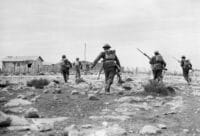 Australian forces capture Derna as Italian troops begin withdrawing toward Benghazi. At the same time, the 1st South African Division launches a feint attack against Mega in southern Abyssinia, preventing Italian reinforcements from being sent to hard-pressed units in Somaliland.
The 4th Indian Division, meanwhile, continues its withdrawal along the coast road toward Derna as British commanders reposition forces amid shifting front lines.
Hitler Repeats Genocidal Prophecy
At the Berlin Sports Palace, Hitler once again repeats his prewar prophecy, declaring that the result of the conflict would be the “complete annihilation of the Jews.” The statement reflects the radicalization of Nazi ideology as the war expands.
Japanese Advances in Southeast Asia
Japanese forces capture Moulmein and its vital airfield in Burma, forcing British troops to evacuate across the Salween River. Elsewhere, British and Commonwealth forces withdraw to Singapore Island, with Japanese troops now only eight miles away.
Japan also captures the strategic naval base of Amboina, located between Celebes and New Guinea, strengthening its defensive perimeter across the Dutch East Indies.
Birth of the Black Widow Night Fighter
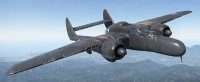 The U.S. Army awards a development contract to Northrop for a dedicated night fighter aircraft. This effort ultimately produces the P-61C Black Widow, the first American fighter designed specifically for night combat.
1943 — Silence from Berlin
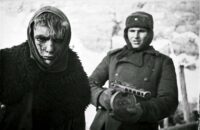 As the German Sixth Army collapses at Stalingrad, Hitler allows the tenth anniversary of the Nazi seizure of power to pass without addressing the nation. This absence marks the first clear sign of his retreat from public appearances as Germany’s military fortunes decline.
Meanwhile, Ernst Kaltenbrunner succeeds Reinhard Heydrich as head of the RSHA, tightening the SS grip over internal security and the machinery of repression.
1944 — Brutal Fighting on Multiple Fronts
Soviet Offensive in Ukraine
Soviet forces attack toward Nikopol along the southern Dnieper River, continuing the relentless push westward that is steadily dismantling German defenses.
Disaster at Anzio
A U.S. Ranger battalion is effectively wiped out during fierce fighting near Anzio, one of the darkest moments of the Italian campaign.
Burma Front Stalls
British assaults against the heavily fortified Japanese position known as the “Golden Fortress” in the Arakan region of Burma are called off after heavy losses.
1945 — Catastrophe and Fanaticism
The Sinking of the Wilhelm Gustloff
In the Baltic Sea, the Soviet submarine S-13 sinks the German liner Wilhelm Gustloff. An estimated 7,000 refugees perish in icy waters, making it the deadliest single naval disaster in history.
Hitler Calls for Fanatical Resistance
On the twelfth anniversary of his rise to power, Hitler issues a final call for fanatical resistance from both soldiers and civilians. He claims that Germany is once again defending Europe from eastern invasion—a delusion that underscores the regime’s collapse as Allied forces close in.