
Pivotal Events from December 7 in World War II History
1939 – Scandinavia Declares Neutrality as Finland Fights On
Norway, Denmark, and Sweden reaffirmed their neutrality as the Winter War intensified.
In central Karelia, the Soviet Ninth Army launched a fresh offensive, attempting to break through Finnish defenses along the frozen fronts.
Britain and France responded with pledges of troops and material to aid Finland—but with no practical way to reach the country, their promises offered little more than symbolic support.
Italy also reiterated her neutrality, choosing—for now—to remain outside the growing conflict.
1940 – German Raiders Slip Into the Atlantic
The heavy cruiser Admiral Hipper departed Kiel for a commerce-raiding mission into the Atlantic.
Her objective: disrupt Allied convoys and strain Britain’s vital supply lines as the Battle of the Atlantic escalated.
1941 – The Attack on Pearl Harbor
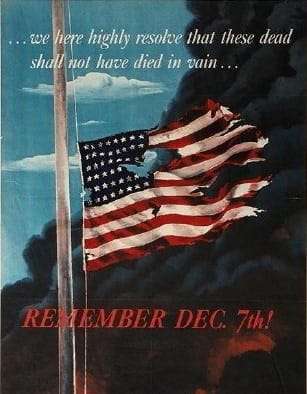 At 6:15 a.m. Honolulu time, the first wave of Japanese carrier-based aircraft lifted off from strike groups positioned 200 miles north of Oahu.
By 7:50 a.m. the sky over Hawaii darkened as 43 fighters, 51 dive-bombers, 70 torpedo bombers, and 50 high-level bombers swept in from the north.
They struck the airfields at Wheeler, Kaneohe, Ewa, and Hickam, destroying 180 American aircraft on the ground before turning their fury on the Pacific Fleet anchored at Battleship Row.
Within minutes, five U.S. battleships and two light cruisers had been sunk.
A second wave arrived shortly after 9:00 a.m., adding three destroyed destroyers and severely damaging another battleship.
By the time the attack ended at 10:00 a.m., the casualties were staggering:
- 2,729 Americans killed
- 1,178 wounded
- Japanese losses: 29 aircraft, 59 airmen, and five midget submarines
Japan simultaneously launched air attacks on Manila and formally declared war on both Britain and the United States.
America began full mobilization within hours.
Elsewhere in the world, the war surged forward. Field Marshal von Brauchitsch attempted to resign following a heart attack, but Hitler deferred the decision.
On the Eastern Front, General Zhukov ordered a major offensive by his West Front’s left flank armies to crush Panzer Group 2 near Tula—an ambitious counterstroke as the German advance faltered in the freezing winter.
In North Africa, Panzer Army Afrika completed its withdrawal to the Gazala Line, preparing for the next stage of the desert war.
1942 – U.S. Naval Power Expands & Commandos Strike in France
One year after Pearl Harbor, the U.S. Navy marked the anniversary by launching the battleship USS New Jersey, one of the mighty Iowa-class fast battleships.
Eleven other ships were launched the same day, symbolizing America’s acceleration toward wartime shipbuilding supremacy.
In France, British Commandos executed a daring 50-mile covert raid up the River Gironde to Bordeaux, attaching limpet mines to German ships under cover of darkness.
Meanwhile, U.S. forces established a beachhead south of Buna in New Guinea, cutting off isolated Japanese units.
1943 – The Cairo Conference Concludes
The Cairo Conference, attended by Roosevelt, Churchill, and Chiang Kai-shek, concluded with agreements on postwar strategy and the eventual liberation of territories under Japanese control.
1944 – Nazi Leadership Calls on Women for the War Effort
Facing mounting losses, Nazi women’s leader Gertrud Scholtz-Klink publicly appealed for all German women over 18 to volunteer for service in the Army or Luftwaffe.
The call underscored Germany’s increasingly desperate manpower situation as the Allies closed in from east and west.
 1945 – General Yamashita Sentenced
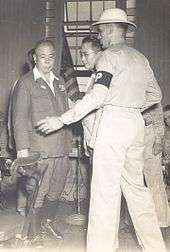 1945 – General Yamashita Sentenced
Japanese General Tomoyuki Yamashita, known as the “Tiger of Malaya,” was sentenced to death for atrocities committed by Japanese forces during the Philippines campaign.
His trial established the precedent of “command responsibility,” holding leaders accountable for crimes committed under their authority.