
1939 – A Christmas Appeal for Peace
On Christmas Eve, Pope Pius XII delivers a radio address appealing for peace, urging the world’s leaders to end the suffering brought by war. His message reaches millions, but fighting continues across Europe.
1940 – Rations and Closed Doors
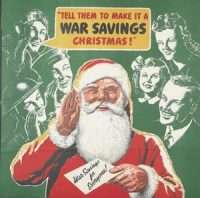 In the United States, the government refuses to admit additional Jewish refugees, fearing that large-scale acceptance would provoke Nazi Germany to expel all Jews from Europe.
In Germany, a special Christmas ration bonus is distributed to civilians, including rice, vegetables, sugar, coffee, and jam—an effort to bolster morale during wartime austerity.
1941 – The Philippines and North Africa
Japanese forces conduct further landings on Luzon, southeast of Manila at Lamon Bay. The Japanese 16th Division advances north in an attempt to link up with the North Luzon Force.
Facing mounting pressure, General Douglas MacArthur announces his decision to withdraw American and Filipino forces to the Bataan Peninsula.
Plans are made to establish a supply base on Corregidor stocked for six months of resistance.
In North Africa, the British Eighth Army captures Benghazi, Libya, continuing the collapse of Italian and German positions in Cyrenaica.
At home, the White House Christmas tree lighting is moved to the south lawn so it can be seen more easily by the public. It will be the final official tree lighting until 1945.
1942 – Stalingrad Tightens
U.S. forces bomb Wake Island, striking Japanese positions.
Following the failure of Operation Winter Tempest, the German attempt to relieve the Sixth Army at Stalingrad, the Red Army launches a new offensive against Army Group Don toward Kotelnikovo.
Soviet forces break through the lines of the 4th Romanian Army and capture one of the two critical airfields used by the Luftwaffe to supply Stalingrad.
In Algiers, Admiral Jean-François Darlan, French commander in North Africa, is assassinated by Ferdinand Bonnier de la Chapelle, a French royalist, plunging Allied politics in the region into uncertainty.
1943 – Commanders Named and Plans Revealed
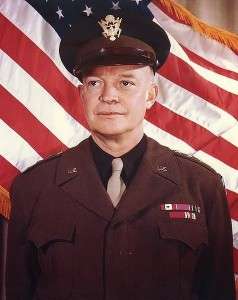 The commanders for the long-awaited Second Front in Western Europe are announced: General Dwight D. Eisenhower is named Supreme Commander of Allied Expeditionary Forces, with Field Marshal Bernard Montgomery commanding the 21st Army Group.
In the Mediterranean, Sir Henry Maitland Wilson becomes Supreme Commander, while Harold Alexander is appointed Commander-in-Chief of Allied Armies in Italy.
On the Eastern Front, Soviet forces begin a third winter offensive. Nikolai Vatutin’s 63 divisions attack across Ukraine and capture the key city of Berdichev.
President Franklin D. Roosevelt broadcasts to the American people, summarizing the Cairo and Tehran Conferences.
He confirms that plans have been laid not only for the invasion of Europe, but also for post-war reconstruction.
1944 – Tragedy in the Channel and Sacrifice in the Air
 In the English Channel, German submarine U-486, commanded by Gerhard Meyer, torpedoes the Allied troop transport SS Leopoldville.
The sinking kills 763 American soldiers of the U.S. 66th Infantry Division.
By order of SHAEF, all news of the disaster is suppressed to protect morale during the Battle of the Bulge.
That same day, the U.S. Eighth Air Force launches its largest mission to date: 2,034 bombers strike German targets in the Ardennes in support of ground forces.
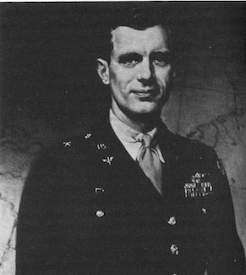
During the mission, Brigadier General Frederick Castle, commander of the 4th Combat Bombardment Wing and former leader of the 94th Bomb Group, is mortally wounded when his B-17 is damaged.
Castle remains at the controls to allow his crew to bail out, sacrificing his life.
He is posthumously awarded the Medal of Honor.