1939 – Intelligence Networks and Allied Reinforcements
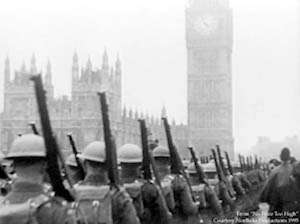 Britain establishes MI9, a specialized military intelligence section tasked with aiding resistance fighters, assisting downed Allied airmen, and helping prisoners of war escape from
Nazi-occupied Europe.
On the home front, the first Canadian troops arrive in Britain, marking an important step in the buildup of Commonwealth forces for the long war ahead.
1940 – Diplomacy, Propaganda, and Conflict Abroad
Anthony Eden returns to government as British Foreign Secretary.
Prime Minister Winston Churchill delivers a radio broadcast directed at Italy, placing blame for the war squarely on “one man”—Benito Mussolini.
Lord Halifax is appointed British Ambassador to the United States, strengthening Anglo-American diplomatic ties.
In the Mediterranean, the Italian torpedo boat Fratelli Cairoli sinks after striking a mine off the coast of Tripoli.
In China, Chiang Kai-shek orders the dissolution of all Communist associations, deepening internal political divisions even as the war against Japan continues.
1941 – Documents Secured and the Pacific Expands
Concerned for their safety in wartime Washington, the Declaration of Independence and the U.S. Constitution are removed from public display at the National Archives and transported in a sealed container to the U.S. Gold Depository at Fort Knox, Kentucky.
They will remain there until October 1, 1944.
In North Africa, sustained Allied pressure forces Field Marshal Erwin Rommel and the Afrika Korps to begin evacuating Benghazi.
In Southeast Asia, Japanese aircraft carry out their first bombing raid on Rangoon.
Despite heavy losses to RAF fighters, the attackers inflict significant damage on the city’s docks.
The Japanese also launch another assault on Wake Island, overwhelming the small U.S. garrison. The island is promptly renamed “Bird Island” by its captors.
Rear Admiral Frank Jack Fletcher’s relief force, still more than 400 miles away, is diverted to Midway.
In the Philippines, American and Filipino troops of the North Luzon Force fall back toward the Agno River under heavy Japanese pressure. British forces likewise evacuate Malaya north of the Perak River.
Off the California coast near Cambria, Japanese submarine I-21 torpedoes and sinks the U.S. tanker Montebello within sight of shore. Survivors report being machine-gunned in lifeboats, though miraculously no one is injured.
1942 – Stalingrad Relief Falters and the Home Front Rallies
German relief forces advancing toward Stalingrad reach the Myshkova River, approximately 30 miles southwest of the city. Exhausted and unable to break through, the three
Panzer divisions begin withdrawing toward Kotelnikovo.
In the United States, entertainer Bob Hope performs for troops in Alaska, launching the first of his famed Christmas shows for servicemen.
The First War Loan Drive concludes, raising $13 billion—far exceeding its $9 billion goal.
1944 – Advances in Europe and at Sea
On the Eastern Front, a Soviet breakthrough southwest of Budapest expands to a 60-mile-wide penetration, placing intense pressure on German defenses.
At sea, a German E-boat force is decisively routed off the Scheldt Estuary, securing Allied control of vital supply routes.
At Papago Park POW camp in Arizona, 25 German prisoners of war escape, emboldened by news of early German successes in the Battle of the Bulge.
 1945 – Discipline, Desperation, and Escape
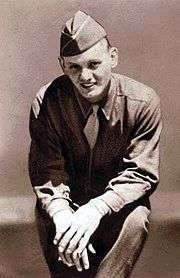
General Dwight D. Eisenhower confirms the death sentence of Private Eddie Slovik, the only American soldier executed for desertion since the Civil War.
German forces reach the maximum extent of their Ardennes offensive, advancing to within three miles of the Meuse River.
In the United States, all horse and dog racing is banned effective January 3, 1945, to conserve labor for the war effort.